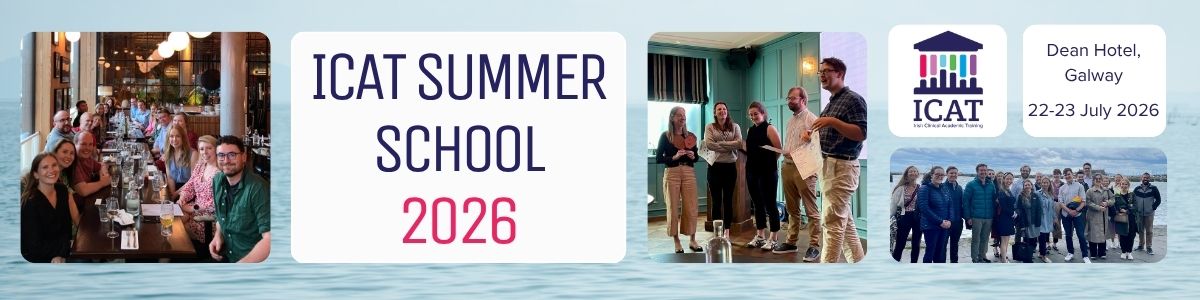
The ICAT Summer School 2026 brought together ICAT fellows, alumni, and expert speakers from across the island of Ireland. The Summer School gave participants the chance to develop their research skills, share experiences and ideas, and build new collaborations across medicine, dentistry and veterinary medicine. Alongside the academic programme, the social activities help fellows connect with peers, strengthen their professional networks and foster a sense of community across the ICAT cohort. The Summer School is an important part of ICAT’s commitment to supporting clinical researchers through training, mentorship, interdisciplinary collaboration and cohort building.
Welcoming ICAT Cohort 10
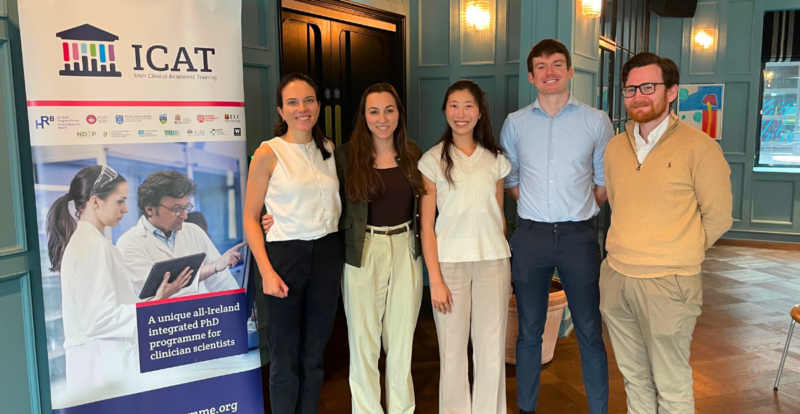
A special highlight of this year’s Summer School was the opportunity to meet and welcome the 10th ICAT Cohort. New fellows had the opportunity to connect with their peers and the ICAT team while exploring the foundations of a successful clinical academic research career. Fellows were introduced to key concepts in research design, developing research ideas, building effective supervisory teams and preparing strong PhD proposals. The annual Summer School provides an opportunity for the newest cohort to begin shaping their research ambitions while building the professional networks that will support them throughout their ICAT journey.
Public and Patient Involvement (PPI) Workshop
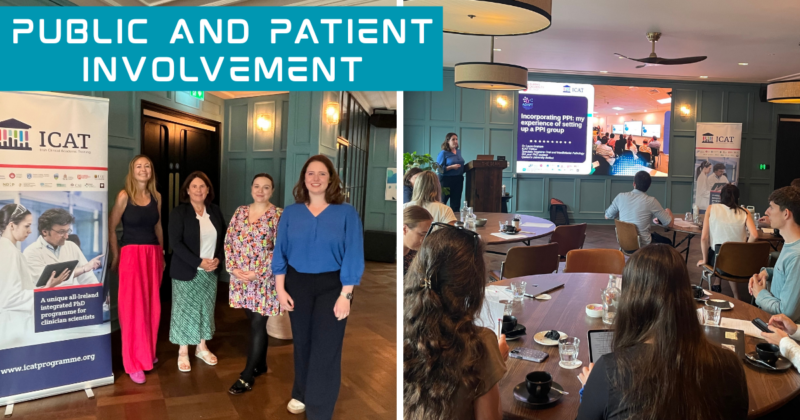
One of the standout sessions of ICAT Summer School 2026 was the Public and Patient Involvement (PPI) Workshop, which explored the importance of involving patients and members of the public in the design, delivery and dissemination of research.
We were delighted to welcome back Dr Ruth McMenamin and Ms Martha Killilea from PPI Ignite, University of Galway, who shared their expertise, experiences and perspectives on meaningful patient and public involvement in research.
Participants also heard from ICAT Fellow Dr Laura Graham, who provided valuable insights from her experience of establishing a PPI group and embedding patient voices throughout the research process. You can read more about the NICRF Head and Neck Cancer Subgroup here, and watch their recent public awareness videos here.
The workshop highlighted how collaborative partnerships with patients and the public can help ensure that research is relevant, inclusive and capable of delivering meaningful impact for the communities it serves.
Understanding Statistical Approaches in Research
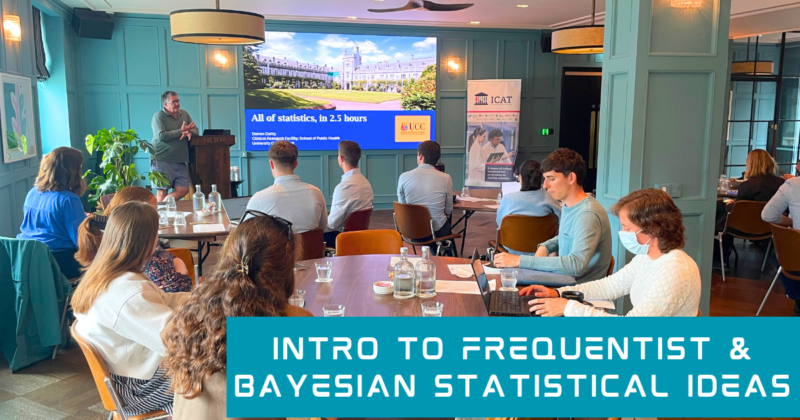
A key – and highly requested – part of the Summer School programme were the statistics sessions delivered by Dr Darren Dahly (University College Cork).
The sessions introduced fellows to both frequentist and Bayesian statistical approaches, providing an accessible overview of the principles, assumptions and applications of each methodology. Through engaging discussion and practical examples, participants strengthened their understanding of statistical thinking and its critical role in rigorous clinical research.
Building Skills in Clinical Data Analytics
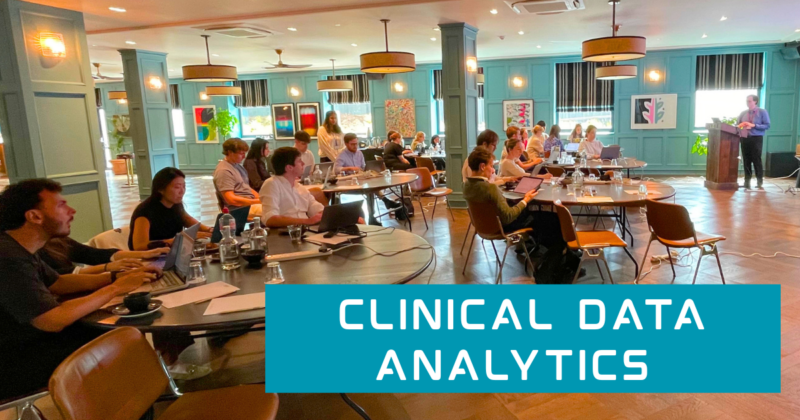
As data-driven research continues to shape healthcare innovation, fellows were fortunate to develop practical analytical skills through the Clinical Data Analytics Workshop.
Led by Dr Conor Judge and Dr Finn Krewer (University of Galway), the workshop covered:
- R and RStudio fundamentals
- Good coding and data management practices
- Hypothesis testing
- Creating demographic tables
- Using AI tools safely and responsibly in research
Through interactive sessions and practical exercises, participants gained valuable knowledge and tools to support their current and future research projects.
Beyond the workshops and presentations, the Summer School created valuable opportunities for researchers to exchange ideas, share experiences and learn from one another. We were delighted to be joined by so many researchers from other programmes and career stages, including PhD students and academic interns.
We extend our sincere thanks to all the speakers, facilitators, and participants who contributed to the success of ICAT Summer School 2026.